


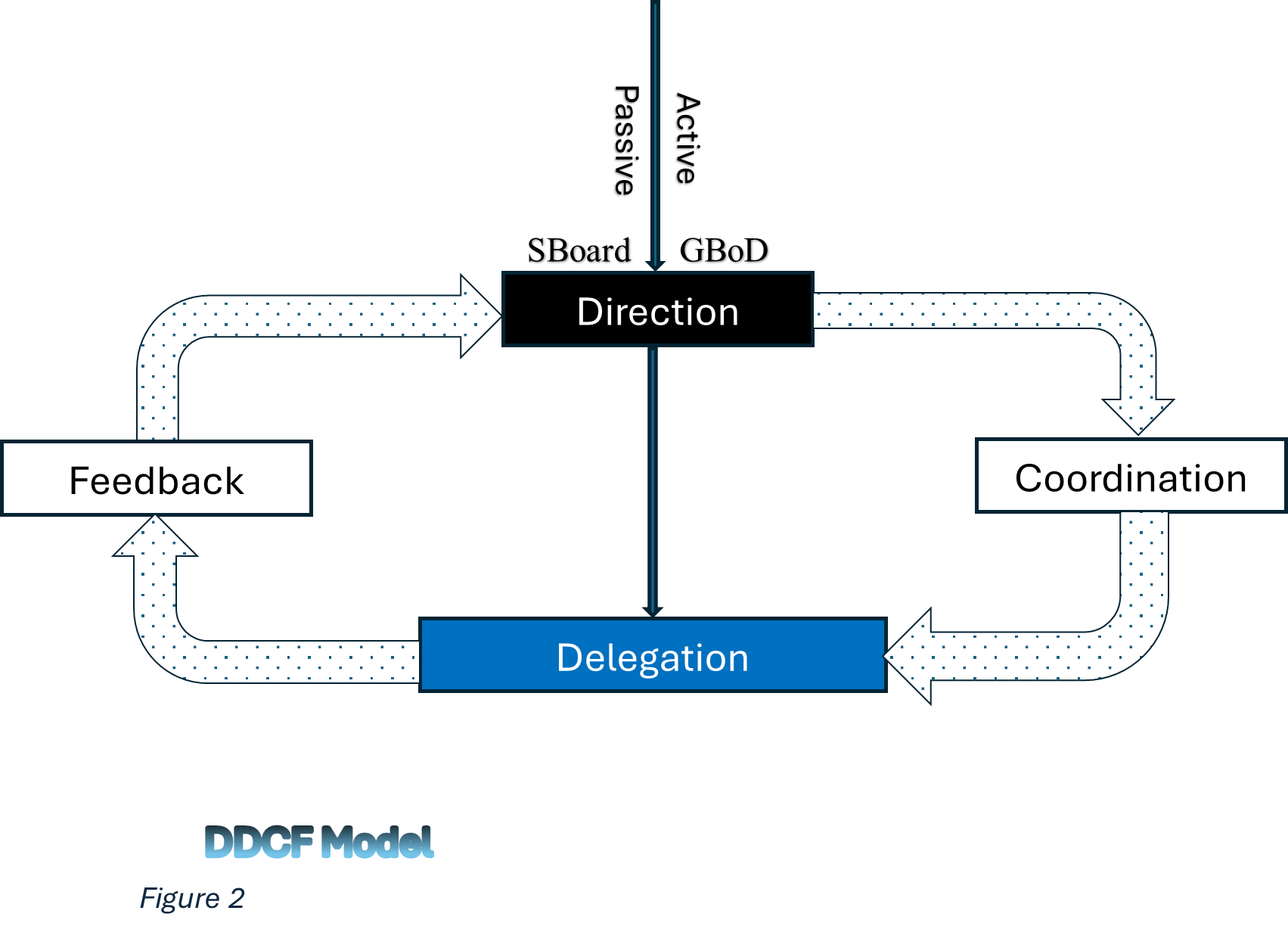
In this context, we replace the theme board of directors with general board of directors. As we said at the beginning, the GBoD consists of the general administration and the supervisory board. The last notion is not entirely new, since in Germany, the problem of the board of directors has already been raised and the supervisory board has already been pronounced. However, we have compensated for the shortcomings to allow this concept to be general. The enterprise's general board of directors, by definition, is the aggregated administrative body established by the chief executive officer or the majority shareholder or the majority partner or the owner of the company and having a dual mission, that of directing and supervising the enterprise, and which must lead the latter on the path to success and sustainability.
The general administration, then, plays an active role while the supervisory board plays a passive role. The supervisory board works hand in hand with the general administration in terms of advice and control and cannot, under any circumstances, be an executive body that can commit the enterprise to any matter. The supervisory board may be made up of natural and/or legal persons – consultants, consulting firms, agencies, etc. - and must have a secretary whose tasks are data collection from the executive board, coordination, etc. ; the functions of the enterprise's supervisory board must be defined in advance in the enterprise's bylaws and must be simple and concise as far as possible. The supervisory board has a fiduciary duty to the chief executive officer or the majority shareholder or the majority partner or the owner or the shareholders or partners.
In the case of an enterprise that does not have a majority shareholder or partner, it must appoint or choose, at the general meeting, a person to perform this position. The supervisory board is in the passive if it is composed of resource people who have permanent seats, but it is in the acute passive if it is composed only of representatives of the shareholders or partners. In fact, the supervisory board, by definition, is the fiduciary body responsible for overseeing the actions, as the case may be, the performance and development of the enterprise on the one hand and providing advice to the general administration and/or the executive board on the other. The enterprise's supervisory board can make recommendations, can participate in the development of the enterprise's objectives, etc., but it should not be a decision-making body.
In short, we are not removing the theme of the board of directors, but we have analyzed it and reformulated it under the concept of the executive board. The executive board of the enterprise, by definition, is all the executives or directors instituted by the general administration and who have delegated power to help it manage the enterprise with a view to its smooth running and concrete results. In fact, the executive board is composed of the general administration and all of its executives or directors. They manage the day-to-day operations of the enterprise.