

During Donald Trump's first presidency, a trade war broke out between the world's two largest economies and continued throughout his term. The question was raised as to who benefited in concrete terms from this trade war. The stakes were high; the administrations of George Bush and Barack Obama should have been asked how to conduct a fair-trade war against their economic rival. If the question were asked, they would probably answer that recourse should be sought to the World Trade Organization (WTO) to force the adversary to respect trade rights while relying on anti-dumping, countervailing duties, and more.
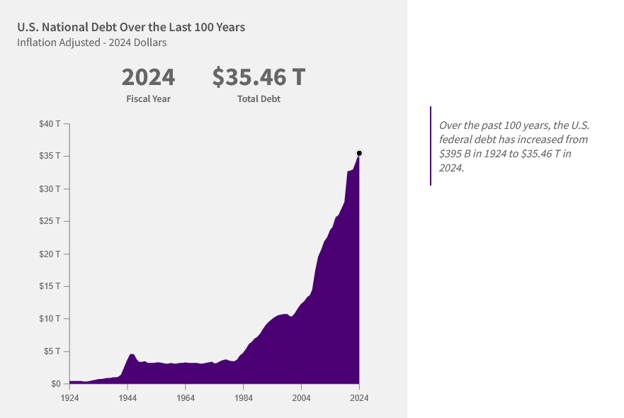
Source: fiscaldata.treasury.gov

Other problems could be raised, but let's stick to these two. For some, compensating for a trade deficit is enough to adjust import fees upwards, which is completely absurd, because the trade balance is based on a state's production and competitive capacity. Therefore, applying high customs tariffs on imports will serve no purpose; there will always be this imbalance if things are not done according to standards. Without going into details about patents, research, etc., China is unbeatable in the field of electric cars, batteries, etc., and has become in such a short time a world leader in terms of artificial intelligence and technology. Instead of threatening the global supply chain with high tariffs here and there on all products, the Donald Trump administration should review things.